Kinesis OS
A spatial operating system and its gestural interface layer
Spatial interfaces · Kinesis Labs · 2026
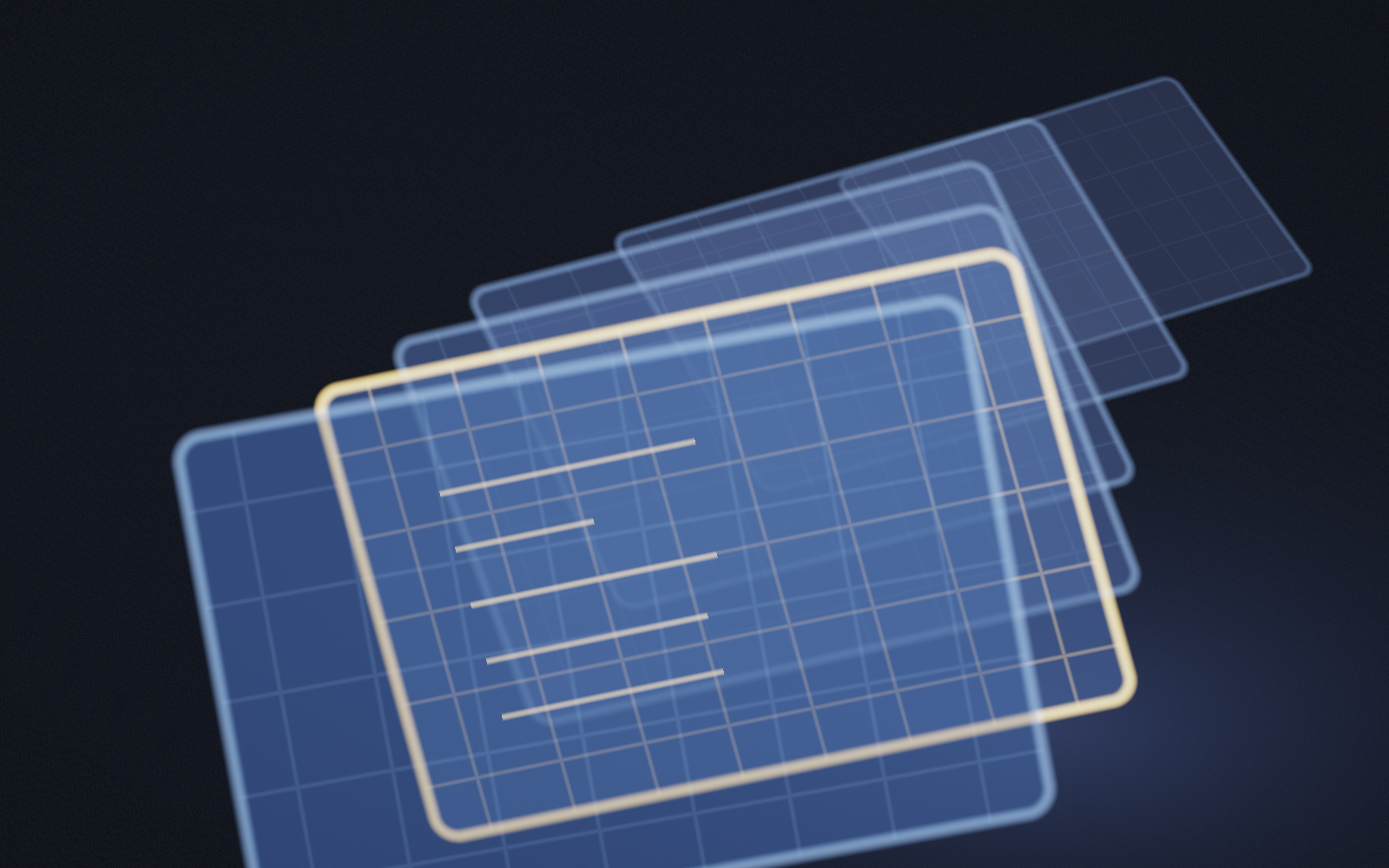
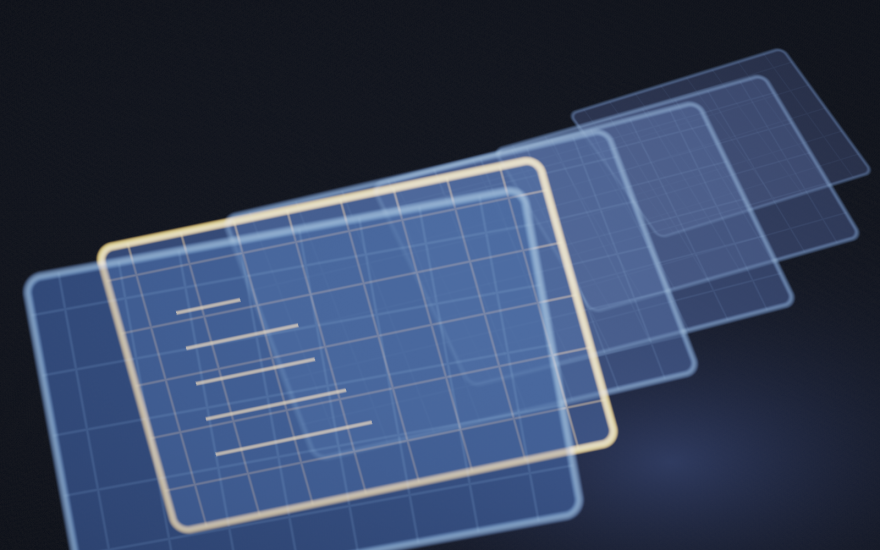
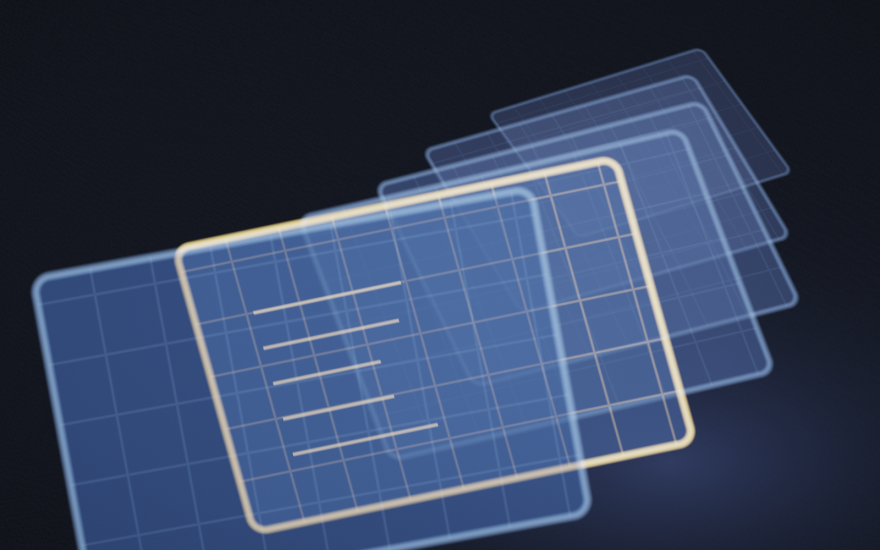
The environment ships with four workspaces, each of which is a scene graph rather than a screen. Panels remember where they were left, at what depth, and at what angle to the wearer — so the room persists between sessions and the muscle memory that builds up is worth something.
Everything is drawn in one pass. There is no compositing layer, no DOM, and no per-frame allocation: the whole interface is instanced geometry with a shared material and a uniform block, which is what buys the headroom for the refraction.
The challenge
Sustained work in a headset fails for a physiological reason, not an aesthetic one: without a controller to rest against, every selection costs a held-arm gesture, and the fatigue compounds until people take the device off. The brief was a full data-manipulation environment that a person could stay inside for two hours.
The approach
Widgets float in a shallow shell around the torso rather than at arm's length, so reaching is a wrist movement instead of a shoulder one. Selection is gaze plus a pinch that accelerates with dwell. Each surface is real refracting glass with a physically-derived index, which gives the eye an unambiguous depth cue and removes the second-guessing that makes 3D interfaces tiring to read.